
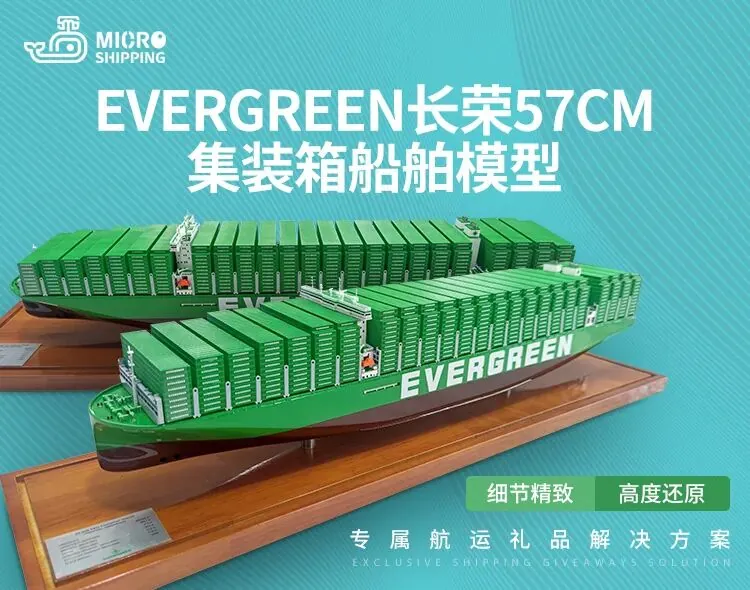
In late 2022, Micro Shipping took on one of the largest single model projects in our history: 7,000+ container ship models for the Taipei headquarters of EVERGREEN Group — one of the world's largest container shipping lines.
The order: 4,000+ units of the 1:700 57 cm EVER ACE (every container printed against the ISO 6346 marking standard, including a re-order added while the first batch was still shipping), followed by 3,000 units of the 1:700 52 cm EVER MAX.
How do you manufacture, inspect and deliver 7,000+ precision models across three continents — and earn a repeat order in the process? Here is how it ran.
The client
EVERGREEN Marine operates container services across Asia, the Americas and Europe, and ranks among the world's largest carriers by capacity. For a company whose brand is painted on vessels in every major trade lane, a scale model is not a souvenir — it is corporate identity in miniature. Colour accuracy, print quality and structural detail get reviewed at headquarters level.
The enquiry itself came through a long-standing client's referral — in this industry, reputation compounds.
Ten steps from hand sample to doorstep
- Hand sample and revision — prototype checked against vessel drawings
- 3D modelling — CAD files finalised after sample approval
- 3D-printed sample — geometry and fit verified
- Mould making — steel production tooling
- Pre-production sample — client sign-off on colour, print, finish
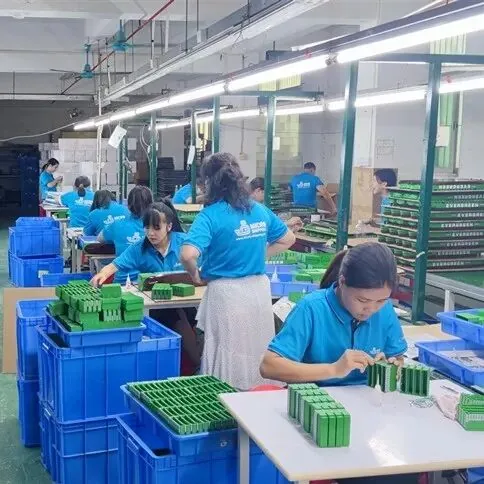
- Mass production
- Inspection — three staged rounds, 30–50 units sampled per batch
- Reinforced packing and dispatch — Germany, London, Vancouver, New York, Panama, Shenzhen, Taipei
- Shipment tracking
- Client feedback loop
Three inspection rounds, with Taipei watching live
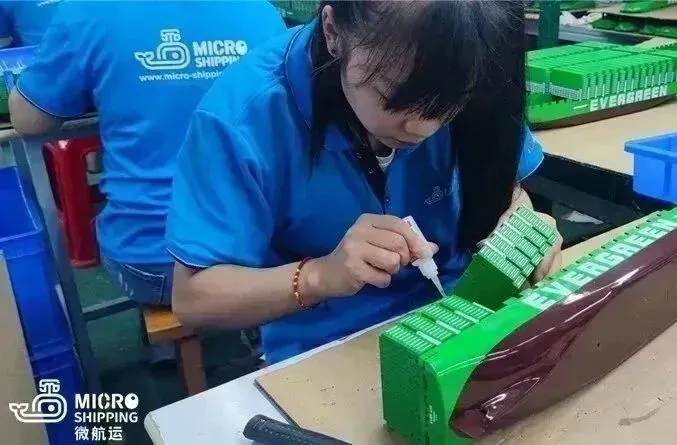
Assembly was arranged in three batches. Our team inspected on site in Dongguan while headquarters leadership in Taipei joined by live video, sampling 30–50 units per batch. Colour, print registration, fittings, cover clarity — each round signed off before the next batch moved.
What "EVERGREEN-grade" QC covered
- Hull and container colours matched to brand standard with zero drift across 4,000+ units
- Container printing, bridge details (antennas, cranes, lifeboats, railings, ladders), bow shape and deck equipment standardised
- Acrylic covers polished smooth — no scratches, dust or fingerprints
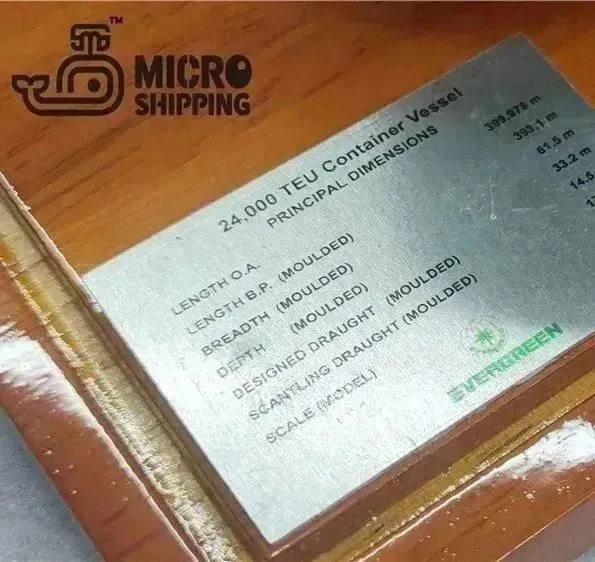
- Wooden bases dimensionally exact
- Packaging: side-opening gift boxes with hot-foil stamped EVERGREEN logo
Engineering the logistics of 7,000 models
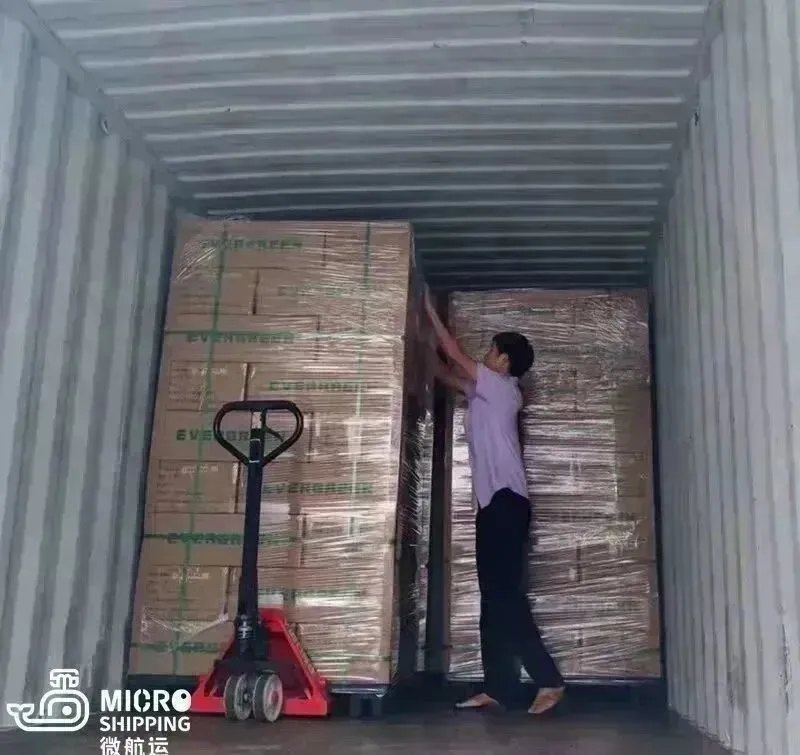
- 2 models per carton, stacked 4 cartons per layer × 9 layers = 72 models per pallet
- Pallets loaded and secured carton by carton into genuine Evergreen containers
- Pallets wrapped in moisture-proof film, carton edges protected
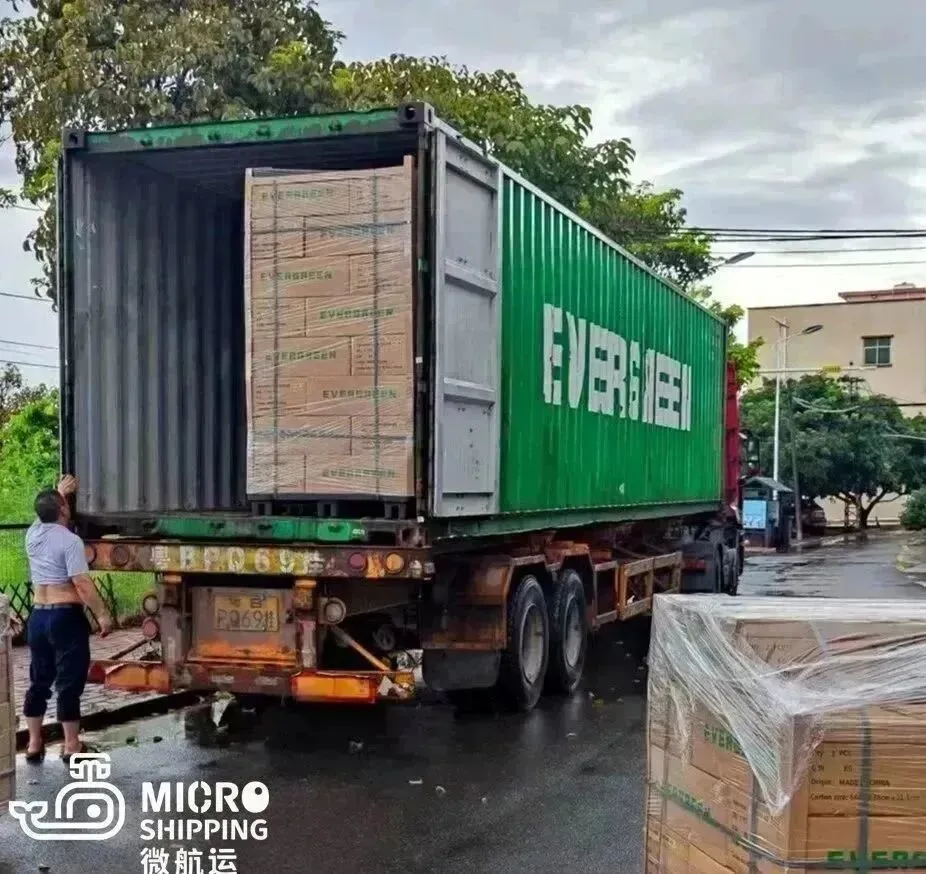
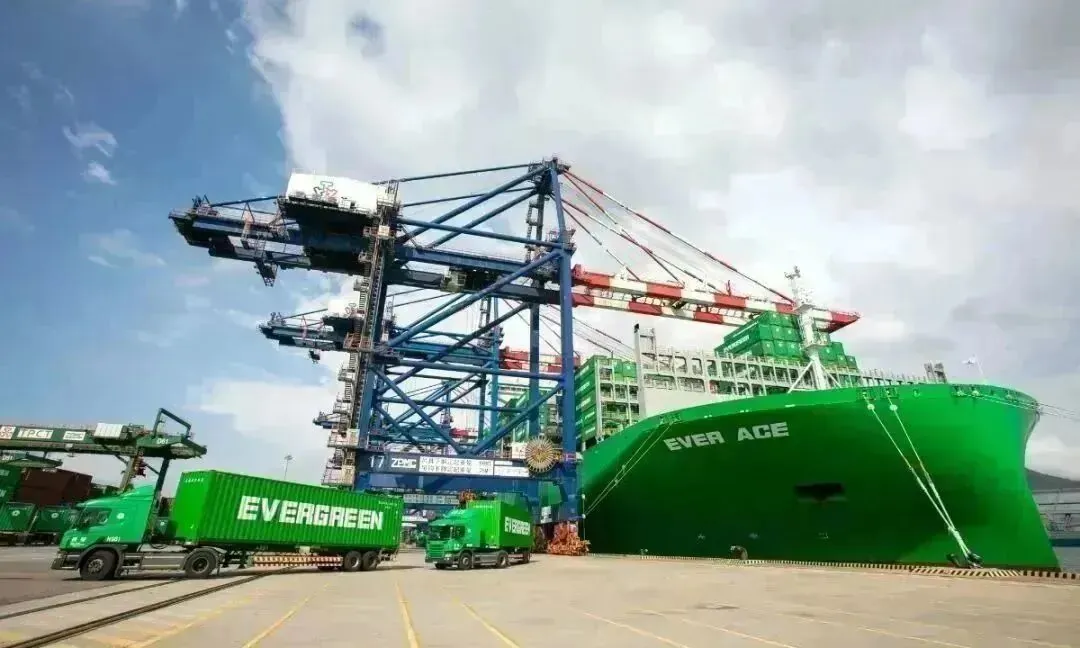
Cartons printed with EVERGREEN branding, pallet strapping in Evergreen green — and the whole consignment loaded into genuine EVERGREEN containers. When the customer opens the container door and sees their own livery inside and out, the unboxing itself is brand theatre.
Keeping 7,000 units identical: where the discipline lives
Anyone who has ordered branded merchandise knows the failure mode: the pre-production sample is perfect, and unit 3,000 is not. On a run of 7,000+ models, consistency is not a QC stage — it is a production architecture. Three parts of the system carried it on the EVERGREEN programme.
First, tooling before printing. Both vessels were cut in production steel moulds, not printed prototypes, so hull geometry, bridge windows and container corner castings stayed dimensionally identical from unit 1 to unit 4,000+. A steel mould drifts nothing; a hand-built master drifts everything.
Second, one colour master for every surface. The Evergreen green on the hull, the ink on 40,000+ printed containers, the foil on the gift boxes and the strapping on the pallets were all matched to a single signed standard. Each batch's first units were checked against that physical standard under standard lighting before the line ran — which is how the last carton of the third batch matched the first carton of the first.
Third, staged inspection with the client watching. Sampling 30–50 units per batch over live video did more than catch defects — it meant Taipei saw the same units our inspectors saw, so approvals never bounced back for re-explanation. Video inspection on volume runs has since become our default for overseas clients: you approve the real units, not a photographer's selection.
The same discipline scales down. A 20-unit executive programme and a 7,000-unit fleet rollout run the same seven stages — here is the full production process — with only the batch sizes changed. And the packaging engineering on this programme (72 models per pallet, four pallets per 20' container) is documented in more detail in our corporate gifting buyer's guide.
EVERGREEN is one of several carriers whose fleet we reproduce at scale; the range behind programmes like this is in container ship models, and desk-scale companions in container pen holders. Our other carrier programmes — MSC over 14 years and OOCL across three — show how these relationships compound.
The EVER MAX follow-up
While the EVER ACE batches were shipping, the second project was already moving: 3,000 units of the 52 cm EVER MAX, samples and 3D files delivered to Taipei before Chinese New Year, tooling right after — targeted ahead of the vessel's 2023 debut.
Planning something similar?
We build custom container ship models for shipping lines, ports and logistics brands in 120 countries & territories — including seven of the world's top liner operators. Tell us your vessel and quantity, and we will scope the programme.