
Ports are the quiet heart of the shipping industry. When a port operator decides to invest in branded gifts, it is not decoration — it is how a terminal that most consumers never see explains itself to partners, tenants and visiting delegations.

Qatar’s rise as a gateway hub sits inside the trade-logistics growth UNCTAD tracks worldwide — and QTerminals was founded in 2016 by Qatar's Mwani Qatar and Milaha to operate Hamad Port — and has since grown across Europe and the Mediterranean, including operations in the Netherlands and Türkiye. Our work with them started in 2019, continued in 2022, and ran for a third round in 2025.
Six years, three programmes. In corporate gifting, repeat business is the only review that counts.
What a port operator actually orders
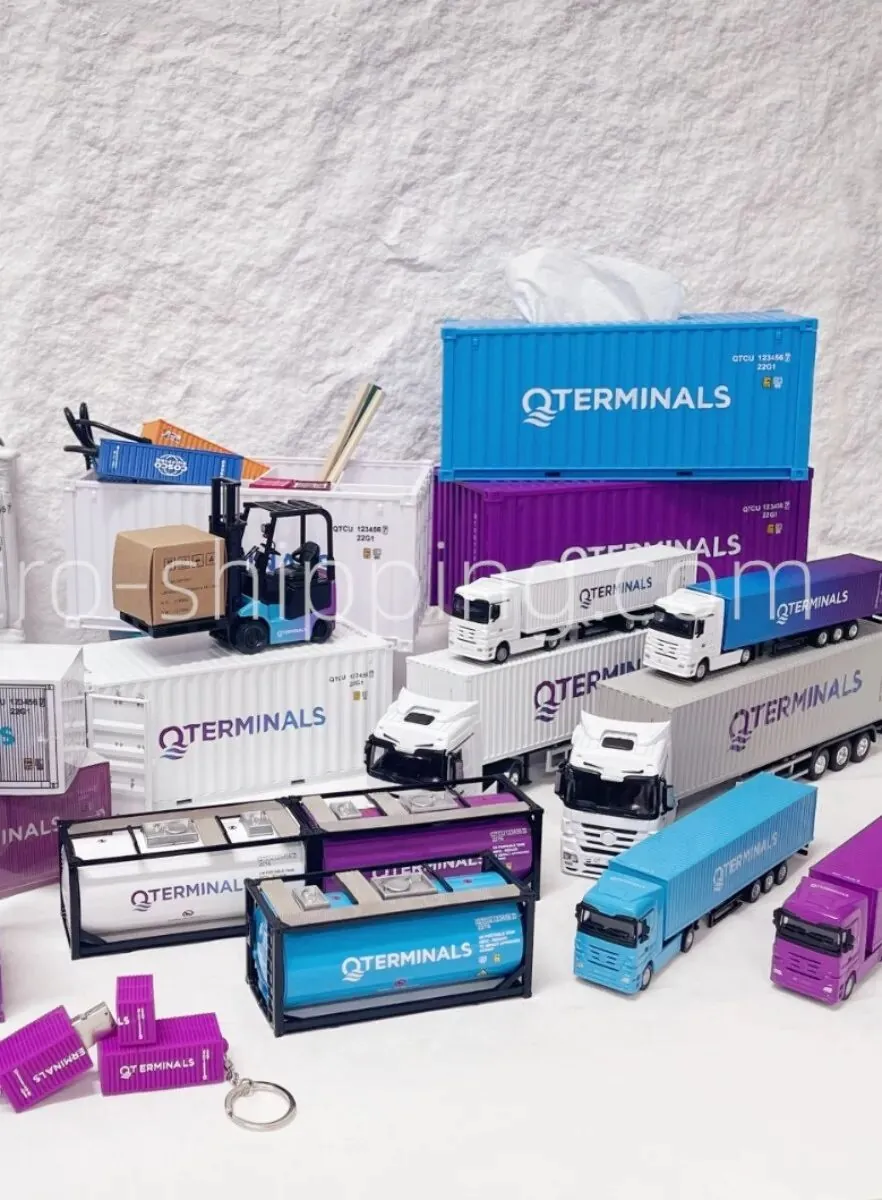
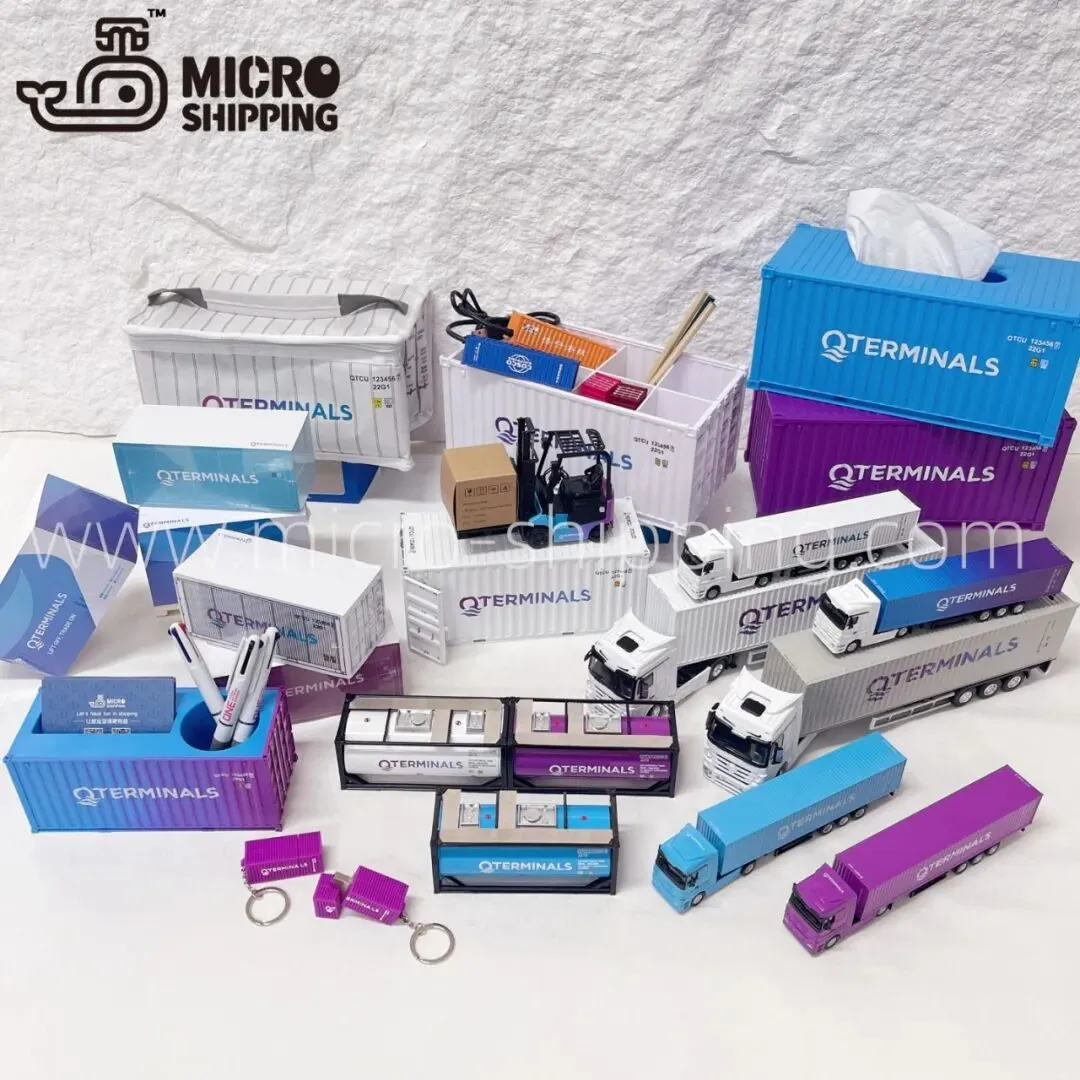
The third programme covered the full spread of gift tiers:
- Desk and display — container models and a 1:87 alloy truck in QT livery, an ISO tank container in alloy
- Functional — tissue-box containers, memo and pen holders that turn a desk into a miniature terminal
- Everyday — insulated cooler bags and other items staff actually take home
What the client watched hardest
Across three programmes, the scrutiny concentrated on the same things: brand colours matched exactly, logo print positioned to the millimetre, and packaging that looked like part of the gift rather than around it. For the third round we ran pre-production samples through repeated sign-off, with client leadership reviewing effect drawings and production samples directly.
Why ports keep coming back

A shipping line's gift represents a vessel. A port's gift represents an ecosystem — quayside, yard, gate, rail. The people who run ports notice when a model gets the details wrong, because they see the real ones every day. That scrutiny is exactly why port clients like QTerminals, SAUDI PORTS and OICT trust a specialist supplier.
Three programmes, three different briefs
The three QT programmes were not the same order repeated — that is worth spelling out, because it is the difference between a supplier with a catalogue and a supplier with a workshop. The 2019 round centred on desk and display models for the head office: the 1:87 alloy truck in QT livery and an ISO tank container in alloy, the pieces a terminal operator's guests actually pick up. The 2022 round shifted functional: tissue-box containers and memo holders that put the brand on daily work rather than on a shelf. The 2025 round integrated all tiers under one order — executive, staff and everyday — so a single brand language ran from the boardroom to the break room.
Each round also inherited the previous one's records. Livery colours, print positions, packaging preferences and inspection expectations were all on file, so pre-production samples arrived closer to final each time and sign-off got faster. That inheritance is intangible in a quote and decisive in delivery.
The logistics behind a port gift
Delivering into Doha is not delivering into Rotterdam, and a programme touching the Netherlands and Türkiye added a third customs regime. Timing, documentation and mode all had to match the client's calendar — and because parts of the range were destined for visitor-facing areas at the terminal itself, delivery windows were tied to facility schedules, not just office hours.
This is routine work for a supplier that ships to 120+ countries and territories, but it is precisely where generalist gift vendors struggle: the gift is the easy part; the last mile through a port facility is not. Our default terms — EXW, FOB or CIF, with DDP and DDU by arrangement — let the client's own logistics team decide how much of the journey they own.
The same port-side discipline runs through our work for other terminal operators, and the products behind this programme live in alloy truck models, container models and container tissue boxes. For the quality standard behind those liveries, see how our models are built; for scale choices on desk pieces, the scale guide. Ports and terminals considering a first programme can start the conversation here — or read how a 14-year carrier relationship compounds in the MSC story.
Planning a programme for a port or terminal? Talk to us — we have been building for the industry since 2012.
The 2025 round, unpacked
It is worth recording how the third programme was actually specified, because it shows the tiering method in its final form. The client's audience split three ways: leadership and visiting dignitaries, department heads and staff, and the wider public-facing front line. Each band got its own tier — alloy desk models and the 1:87 truck up top; tissue-box containers and memo holders in the middle; cooler bags and everyday carry at the base — but every tier drew from the same approved livery standard, so a visitor moving from the CEO's office to the operations floor saw one brand, not three interpretations of it.
Approvals also matured by round three. Effect drawings, then pre-production samples, then first-article units went through sign-off with the client's leadership reviewing directly — a rhythm established in 2019 and refined since, which is why a programme this broad ran without a single emergency cycle. For suppliers, repeat business is not just revenue; it is process memory that makes each round calmer than the last. The tiering method itself is transferable to any large organisation, and the packaging standards it depends on are described in our corporate gifting guide; a carrier-side version of the same multi-tier approach is in the OOCL three-year story.