
Ask for "a container model" and you will get a follow-up question: in which scale? The scale decides the size on the desk, the price per unit, the material options and — more often than buyers expect — whether the gift actually gets kept.
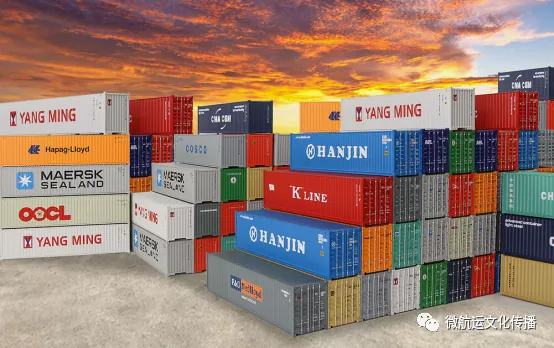
Working out the size yourself
The maths is simple. A 20'GP container measures 6.0 × 2.4 × 2.5 m — dimensions standardised in ISO 668. Divide the real length by the model length you want, and you have your scale.
Want a 20 cm model of a 20' container? 600 cm ÷ 20 cm = 1:30. The model will then be 8 cm wide and about 8.3 cm high.
The scales in practice
1:10 — the statement piece
Aluminium, around 60 cm long. Exhibition halls and office receptions, not desk gifts. When the model itself is the display, this is the scale.
1:20 — the exhibition workhorse
ABS engineering plastic. Big enough to read across a stand, light enough to ship without a forklift.
1:25 — where function meets the gift
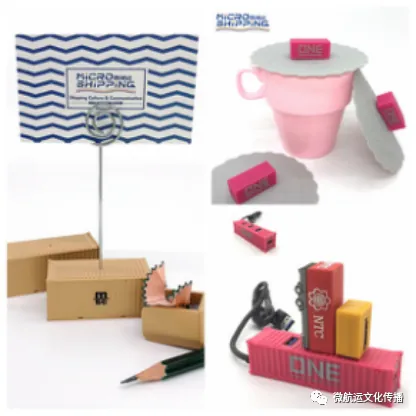
This is the scale behind many of the items that made container gifts popular in the first place: tissue-box containers, storage boxes. ABS, printed in full brand colour.
1:30 — the corporate-gift favourite
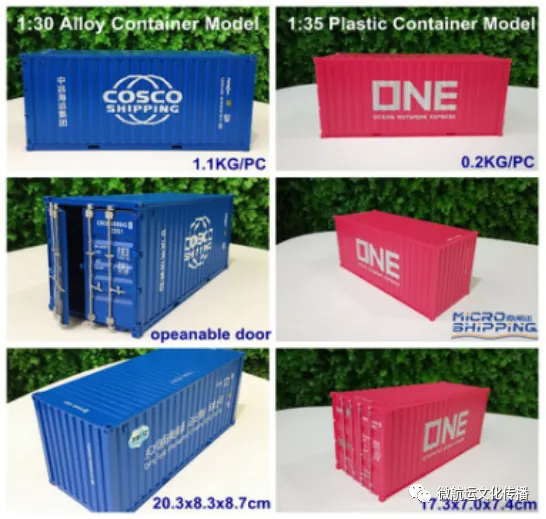
Zinc alloy, and the most popular choice for mid-to-high-end business gifts. It has the weight that makes a gift feel substantial — the first thing people do when they pick one up is hold it.
1:35 — the economical choice
ABS, for high-volume giveaways where unit cost matters: desk tidies, pen holders, giveaway containers.
1:50 — the collector's scale
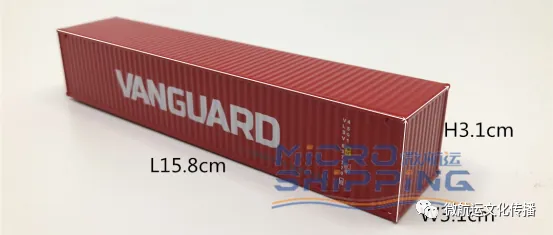
Zinc alloy, and the standard for ISO tank models and the containers that ride on 1:50 truck models. Detail tolerances are tight here; so is the QC.
1:87 — HO scale
The railway-modelling standard, and the natural home of alloy truck-and-container combinations. Around 19.5 cm for a full rig, with the container removable.
Material follows the scale
A rule of thumb that holds across almost every programme we build:
| Scale | Typical material | Typical use |
|---|---|---|
| 1:10 | Aluminium | Exhibition and reception display |
| 1:20 | ABS | Exhibition giveaway |
| 1:25 | ABS | Functional gifts — tissue boxes, storage |
| 1:30 | Zinc alloy | Corporate gifts, mid-to-high end |
| 1:35 | ABS | Volume giveaways, desk items |
| 1:50 | Zinc alloy | Collectors, tank models, truck containers |
| 1:87 | Zinc alloy | HO-scale truck and container sets |
What we would ask before quoting
Three questions settle most scale decisions: Where will it sit — desk, shelf or exhibition floor? How many units? And does it need to do a job (hold pens, store things) or purely represent the brand?
Ship models run on a different chart
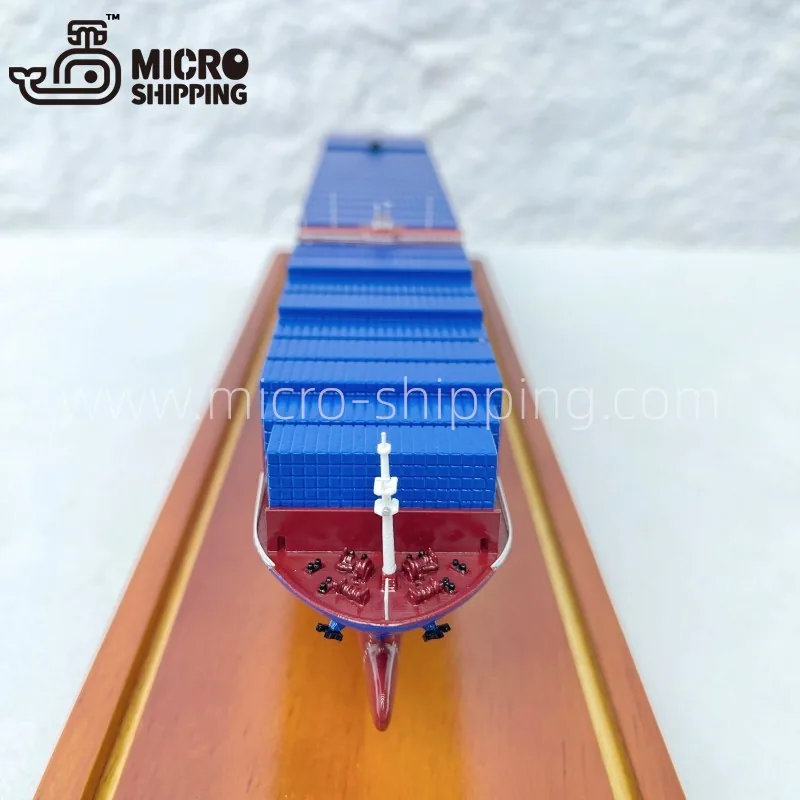
Everything above covers the container and truck system. Vessel models use a separate scale ladder, inherited from the ship-modelling hobby, and corporate programmes live mostly on four rungs of it.
1:700 is the fleet-run scale. A 400-metre ultra-large container ship becomes about 57 cm — which is exactly how we produced 4,000+ EVER ACE models at 57 cm and 3,000 EVER MAX at 52 cm for a single client programme. At 1:700, thousands of units ship in ordinary ocean containers, which is the whole point: the scale makes fleet-scale gifting logistically possible.
1:400 to 1:450 is the executive desk band. A 20–25 cm model of the same vessel carries enough detail to read across a meeting room while staying one-hand portable. This is where most anniversary and client-gift programmes land.
1:250 to 1:150 covers display and VIP pieces — the 40–80 cm models that anchor a boardroom or an exhibition stand. Hand-finished hulls, individually printed container arrays, engineered bases with engraved nameplates.
1:100 and below is landmark territory: the 227 cm cruise models, the 4.2-metre crane-installed exhibition piece. Engineering replaces production — internal frames, sectioned transport, installation plans. The worked examples are in our Viking programme and the 4.2-metre installation story.
One practical consequence worth knowing: the same vessel can be built at several of these scales from the same 3D master, which is how a client starts with a 1:700 fleet run and later re-orders the flagship at 1:250 for the boardroom — the design cost is paid once, and the re-order inherits it.
Budget bands, honestly
Price follows scale and material more than anything else, so it can be banded the same way. ABS units at 1:35 and smaller are the volume tier — priced for whole-team distribution, ordered in hundreds. Zinc alloy at 1:30 and 1:50 is the corporate tier — one order of magnitude up, priced per unit like a premium gift, typically ordered in units or dozens. Vessel models at 1:400 and larger run from the mid hundreds of dollars per unit at 20 cm to four figures at 60–80 cm, with landmark builds quoted individually. Tooling is the wildcard: an existing mould is a re-order; a brand-new hull is a development project, priced as such.
Two cost notes that catch buyers by surprise, both in the buyer's favour. First, MOQ is genuinely low — a single piece is possible, though four to five pack into one master carton and travel in one wooden crate, which visibly drops unit cost. Second, sample fees are charged because samples consume real bench time, but they are credited against the production order — partially or in full by quantity. The full arithmetic, including lead times by material, is in the corporate gifting guide.
Three questions before you choose
Most scale debates end faster with the right three questions than with any chart. One: where does it live — desk, shelf, exhibition floor or lobby? Two: how many units, and are they one tier or several? Three: must it do a job — hold pens, store items, run on track — or purely represent the brand? Answer those and the scale, material and budget band usually select themselves; the ranges they select from are in container models, alloy trucks and container ship models. The markings that make any of these a faithful replica are decoded in our markings guide, and the production system behind all scales in how our models are built.
Tell us those three things and we will suggest a scale, material and budget band the same week. Start at container models or go straight to a quotation.
A worked example: one vessel, three scales
Real programmes rarely stay at one scale, and a recent cruise-retail client shows how the chart above plays out across a single order book: a 20 cm alloy souvenir sold onboard in 1,000 sets, a 50 cm full-colour display model in 20 sets, and a 227 cm landmark in 5 sets — the same hull specified three ways, documented in our Viking programme. The 20 cm units were die-cast alloy because a retail keepsake has to feel like one; the 50 cm display versions were full-colour spray for VIP gifting; the landmark pieces moved into engineered bases and sectional transport. Three scales, three price bands, one colour master — and the re-order at each tier inherited the approvals of the one below it. That is the practical case for choosing a supplier whose production system spans the chart rather than a single row of it.